Wisdom Teeth Removal vs. Keeping Your Wisdom Teeth
Few dental decisions generate as much anxiety, confusion, and strong opinion as the question of whether wisdom teeth should come out. Patients often arrive expecting a simple yes or no. What they usually need instead is a more careful conversation. Wisdom teeth can remain harmless for years, even for life. They can also become a recurring source of pain, infection, crowding, damage to neighboring teeth, and difficult hygiene problems that only get worse with time.
The right answer depends on anatomy, age, symptoms, X-ray findings, oral hygiene habits, and how much room exists in the jaw. It also depends on timing. Removing wisdom teeth before they cause damage is very different from removing them after repeated infections or decay have already set in.
This is where the decision often gets oversimplified. Some people hear that everyone should have wisdom teeth removed. Others hear that removing healthy teeth is unnecessary. Both positions miss the clinical reality. Wisdom teeth occupy a gray zone. They are not automatically a problem, but they are not automatically safe to keep either.
What wisdom teeth actually are
Wisdom teeth are the third molars, the last set of teeth to develop and erupt. Most people have up to four, one in each back corner of the mouth, although some have fewer and some never develop them at all. They usually begin to emerge in the late teen years or early twenties, which is why many people first hear about them around high school graduation or during college.
Human jaws today are often smaller than the jaws of our distant ancestors. That mismatch matters. Third molars are trying to fit into a dental arch that may already be full. When there is not enough space, they may erupt only partway, stay trapped under the gum, remain buried in bone, or angle into the tooth in front of them.
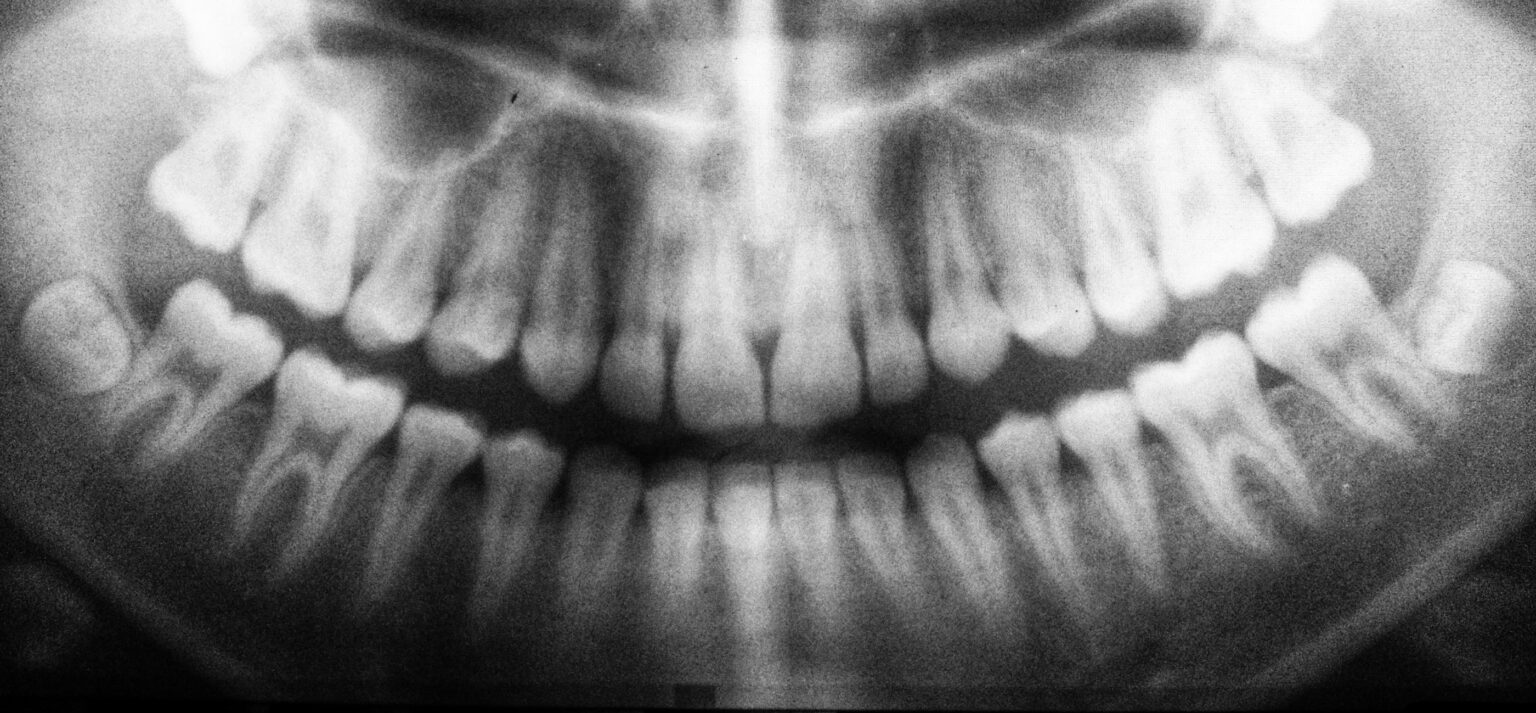
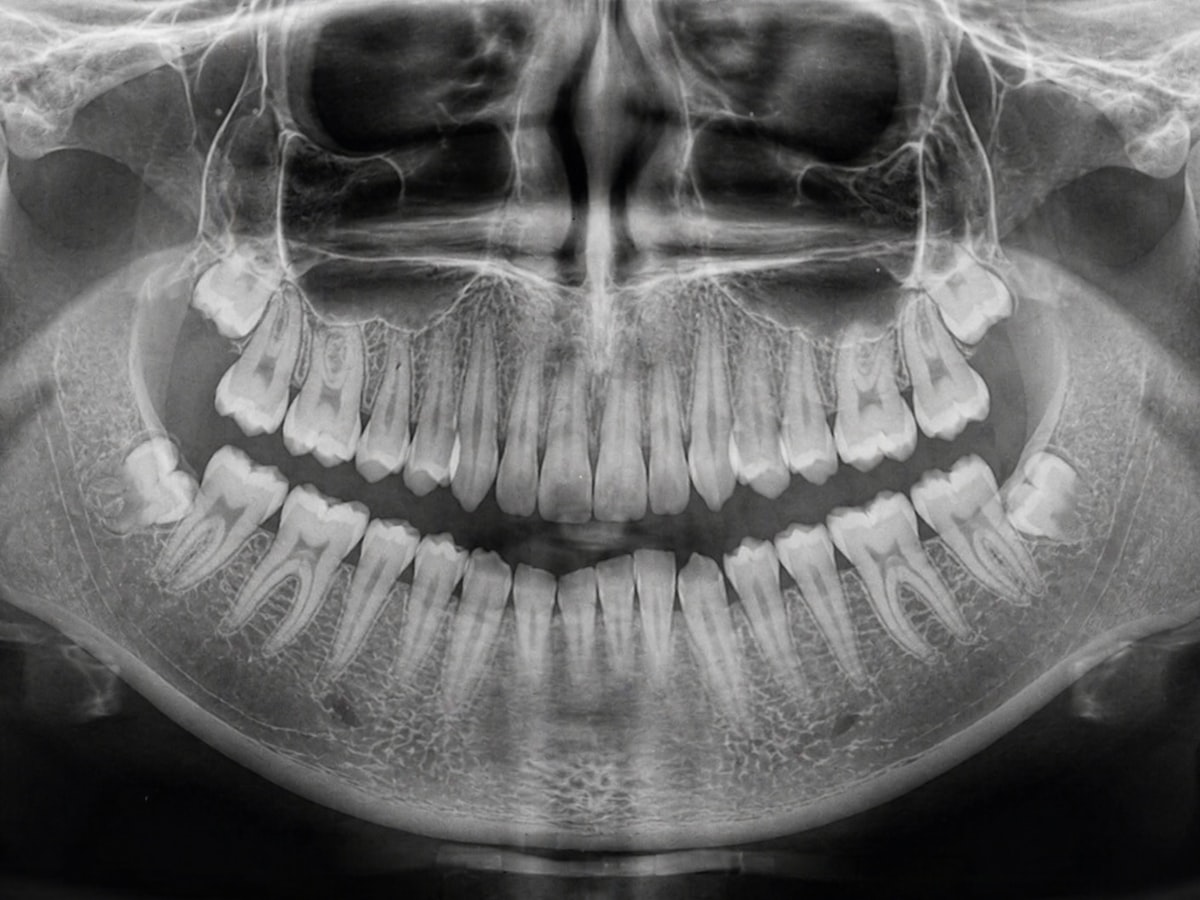
A fully erupted wisdom tooth that is straight, easy to clean, and biting properly against an opposing tooth is a very different situation from a partially erupted tooth tucked under a flap of gum. On an X-ray, both count as wisdom teeth. In practical terms, they behave nothing alike.
Why the decision is rarely automatic
One of the most common misconceptions is that dentists recommend extraction simply because wisdom teeth exist. In reality, the recommendation usually comes from risk assessment. The question is not only whether a wisdom tooth hurts today. The bigger question is what that tooth is likely to do over the next five, ten, or twenty years.
A symptom-free wisdom tooth can still create trouble. It may be impossible to floss around. It may trap food and bacteria behind the second molar. It may be angled in a way that slowly damages the tooth in front of it. It may sit partly under the gums, allowing inflammation to flare repeatedly. Patients are often surprised to learn that the front edge of a lower wisdom tooth can cause decay on the back of the second molar, an area that is notoriously hard to repair once the cavity gets deep.
On the other hand, some wisdom teeth behave beautifully. They erupt into a normal position, stay clean, never inflame, and function like any other molar. Removing those teeth without a sound reason is not always the best choice, especially when surgery itself carries cost, discomfort, and real, though usually manageable, risks.
When keeping wisdom teeth makes sense
There are legitimate reasons to leave wisdom teeth in place. If the teeth are healthy, fully erupted, functional, and easy to keep clean, observation may be the most sensible path. This is particularly true when imaging shows no cyst formation, no decay, no gum disease, and no pressure-related damage to neighboring teeth.
In practice, the best candidates for keeping wisdom teeth usually share a few features. The tooth has enough room. The gum tissue around it is stable. The patient can brush and floss that area effectively. Regular dental exams and X-rays show no silent changes over time. Those conditions sound straightforward, but they are more demanding than many people realize. The very back of the mouth is one of the hardest places to clean well, especially for patients with a strong gag reflex, limited mouth opening, or tightly packed teeth.
Age also shapes the decision. A 40-year-old with four stable, healthy third molars and no history of gum inflammation is a different case from a 19-year-old whose lower wisdom teeth are still developing at a sideways angle. Long-standing stability carries weight. If a wisdom tooth has been present for years without pathology and remains accessible for cleaning, it has in some sense earned its place.
When removal is usually the better option
There are also situations where removal is hard to argue against. Repeated swelling around a partially erupted wisdom tooth is a classic example. This condition, often called pericoronitis, occurs when bacteria and debris collect under the gum flap that partly covers the tooth. Patients describe a dull ache, swelling, a bad taste, pain when chewing, and sometimes difficulty opening the mouth. It may settle down with cleaning, rinses, or antibiotics, then return weeks or months later. That pattern matters. Recurrent inflammation is a sign that the environment around the tooth is not self-sustaining.
Impaction is another major reason for extraction. An impacted wisdom tooth may never erupt normally because it is blocked by bone, gum, or the neighboring molar. Some impacted teeth stay quiet. Others push against the second molar, contribute to decay, trap bacteria, or form cysts around the crown. Not every impacted tooth must come out immediately, but many do warrant close monitoring or planned removal.
Decay is a common tipping point. Once a wisdom tooth develops a cavity in a location that is hard to restore and harder to maintain, extraction often becomes more practical than trying to save it. The same goes for gum disease affecting the area behind the second molar. If keeping the wisdom tooth puts a more important neighboring tooth at risk, priorities become clear.
Orthodontic considerations sometimes enter the discussion, though this topic is often overstated. Wisdom teeth do not single-handedly cause all lower front teeth crowding. Teeth can shift over time for several reasons, including natural age-related movement. Still, if a third molar is erupting under pressure and space is limited, it can complicate an already crowded posterior segment and make hygiene worse.
The strongest reasons dentists recommend Wisdom Teeth Removal
- repeated infection or gum swelling around a partially erupted tooth
- decay in the wisdom tooth or on the back of the second molar
- impaction that threatens adjacent teeth, bone, or gum health
- cysts, damage seen on X-rays, or persistent pain
- a position that makes proper cleaning unrealistic long term
Those reasons are not theoretical. They are the situations that tend to create difficult treatment later, when the surgery may be more complicated and the neighboring tooth may already be compromised.
The case for earlier removal
Timing is one of the most practical parts of this decision. When removal is clearly indicated, earlier surgery is often easier than delayed surgery. Younger patients generally heal faster, the roots may be less fully formed, the surrounding bone is often less dense, and the risk of prolonged recovery can be lower. That does not mean adults cannot do well with extraction, because most do. It means the procedure may become less convenient with age, especially if the tooth has already caused infection, decay, or periodontal damage.
This is something clinicians see often. A patient in their late teens is advised to monitor or remove two lower wisdom teeth with difficult angulation. They feel fine, so they postpone. Several years later they return with swelling, food packing, a cavity on the back of the second molar, or bone loss in that area. At that point, the decision is no longer about preventing a problem. The problem has arrived, and treatment is now trying to limit collateral damage.
That said, preventive removal should still be justified, not reflexive. A recommendation carries more weight when it is tied to visible findings, anatomical limits, and foreseeable complications rather than habit.
What surgery involves, realistically
The phrase “wisdom teeth removal” can describe very different procedures. A fully erupted upper wisdom tooth may come out quickly with relatively little trauma. A deeply impacted lower tooth close to the jaw nerve may require a more involved surgical approach. Patients often hear one person say they were back to normal in two days and another say they needed a week. Both experiences can be true.
The procedure usually involves local anesthesia, and in many settings sedation is also offered. The surgeon may loosen the tooth, remove some surrounding bone, or divide the tooth into sections to reduce stress on the jaw. Stitches are sometimes placed, especially when the tooth was impacted.
Recovery tends to be most uncomfortable during the first two to three days, then gradually improves. Swelling, stiffness, and difficulty chewing are common. Pain is usually manageable with prescribed or recommended medication, cold compresses, rest, and careful aftercare. Most people return to routine activity within a few days, though complete tissue healing takes longer.
Potential complications deserve honest discussion. Dry socket, where the blood clot dislodges from the extraction site, can cause significant pain several days after surgery. Infection is possible. Temporary numbness of the lip, chin, or tongue can occur when lower wisdom teeth sit near sensory nerves. Permanent nerve injury is uncommon, but its possibility becomes part of the risk conversation when anatomy is close. Sinus communication can occur with upper wisdom teeth because of their proximity to the maxillary sinus.
These risks are real, yet context matters. For many patients, the risk of leaving a problematic wisdom tooth in place is greater than the risk of removing it under planned conditions.
What watchful waiting should actually look like
If you and your dentist decide to keep wisdom teeth, that choice should not mean forgetting about them. Observation works best when it is active, not passive. The teeth should be checked clinically and on periodic X-rays as recommended. Gum health around the back molars should be measured. Hygiene has to be realistic, not aspirational.
This is where patient habits matter more than people expect. A person who keeps regular appointments, tolerates back-of-mouth cleaning well, and responds early when symptoms appear is a better candidate for retention than someone who rarely comes in and struggles to clean the area. Good anatomy helps, but behavior and follow-through matter just as much.
A common scenario is the “mostly erupted” lower wisdom tooth that does not hurt most of the time. Patients understandably want to leave it alone. But if food gets trapped there daily, the gum repeatedly feels tender, and flossing is nearly impossible, the tooth is not truly low maintenance. It is quietly demanding attention all the time. Many of those teeth eventually declare themselves.
Signs that a quiet wisdom tooth may not stay quiet
- soreness or swelling behind the last regular molar
- bad taste or odor that keeps returning
- food trapping in the same back corner of the mouth
- jaw stiffness or pain when chewing
- X-ray changes involving the tooth next to the wisdom tooth
These warning signs do not automatically mean surgery is urgent, but they do mean the tooth deserves prompt evaluation rather than another round of hoping it settles down on its own.
Common questions patients ask
One frequent question is whether wisdom teeth always cause crowding. The honest answer is no. They can contribute to posterior pressure and cleaning problems, but they are not the sole explanation for every shifting tooth. Another question is whether pain must be present before removal is justified. Also no. Some of the most important findings, such as decay on the back of the second molar or cyst formation, may begin without obvious symptoms.
Patients also ask whether all four need to come out if only one is causing trouble. Sometimes yes, sometimes no. If the others are healthy, functional, and low risk, they may stay. If several share the same poor anatomy or are likely to create future trouble, removing them during one surgical episode can make sense. That decision should be individualized.
There is also the understandable fear of recovery. People remember dramatic stories from friends. What matters more than the story itself is the type of impaction, age, general health, smoking status, and adherence to aftercare. Two patients can have very different recoveries because the surgeries were not equivalent.
Age changes the balance
The discussion around wisdom teeth at age 17 is not the same as the discussion at 37 or 57. In younger patients, the emphasis is often on predicting whether enough space exists and whether the eruption path is favorable. In adults, the focus may shift to maintenance, gum health, restorability, and the condition of the second molars.
Older adults can keep wisdom teeth successfully, especially if they have remained stable for years. But when a retained wisdom tooth becomes infected or decayed later in life, extraction may be complicated by denser bone, medical conditions, medications, and slower healing. There is no age cutoff that dictates what should happen. The point is that the risk profile evolves, and decisions should evolve with it.
How to think about the trade-off
Keeping wisdom teeth avoids surgery now, but it may commit you to years of monitoring and a higher chance of future complications if the anatomy is unfavorable. Removing them eliminates the tooth-related risk, but it introduces procedural risk, cost, downtime, and recovery. Neither path is universally easier. The better path is the one that fits the actual tooth, not the folklore surrounding it.
A good decision usually comes from a conversation that includes Wisdom Teeth Removal Oxnard Dentistry the tooth’s position, the gum condition around it, the quality of oral hygiene access, your age, your medical history, and your tolerance for uncertainty. Some patients prefer to address a foreseeable problem on a planned schedule. Others reasonably choose careful observation when the evidence for immediate removal is weak.
That balance is where professional judgment matters most. A well-positioned wisdom tooth that functions normally and stays clean is not guilty by association. A partially erupted lower wisdom tooth with recurring inflammation is not innocent just because it only hurts once in a while.
The practical bottom line
If your wisdom teeth are healthy, fully erupted, easy to clean, and not damaging nearby structures, keeping them may be perfectly appropriate. If they are impacted, repeatedly inflamed, decayed, or threatening the second molars, removal is often the smarter and more protective choice.
The key is not to treat wisdom teeth as a category. Treat each tooth as a case. Look at the X-rays. Consider the space available. Be honest about hygiene. Pay attention to patterns, not just isolated flare-ups. When the evidence points toward trouble, timely Wisdom Teeth Removal can prevent a much bigger problem later. When the evidence points toward stability, thoughtful monitoring can spare you an unnecessary procedure.
That is the real comparison, not removal versus keeping in the abstract, but risk now versus risk later, weighed tooth by tooth, patient by patient.
Oxnard Dentistry
1730 E Gonzales Rd, Oxnard, CA 93036, United States
+1 805-307-8731
FAQ About Wisdom Teeth Removal
How painful is it to remove a wisdom tooth?
Local anesthetic numbs the area during extraction. Pressure may still be noticeable; tell the dentist if you feel pain. Soreness and swelling afterward are common. Follow the pain-control instructions provided for your situation.
How long is recovery for wisdom teeth extractions?
Recovery varies with the tooth position and complexity of the extraction. Some people resume routine activities quickly, while others need several days of rest. Soreness, swelling and jaw stiffness can last up to two weeks. Follow your clinician's aftercare and activity advice.
What are the risks of wisdom tooth removal?
Possible complications include dry socket, infection, persistent bleeding and changes in sensation from nearby nerve injury. Your dentist or oral surgeon should explain your individual risks before treatment. Seek prompt dental advice for bleeding that will not stop, fever, or severe or worsening pain and swelling.